
6 rules to lock down before running a search-driven website
Search traffic becomes unstable when a site treats indexing, metadata, and internal links as afterthoughts. The problem is usually not one broken page. The problem is that the operating rules were never fixed, so every new page adds another inconsistency.
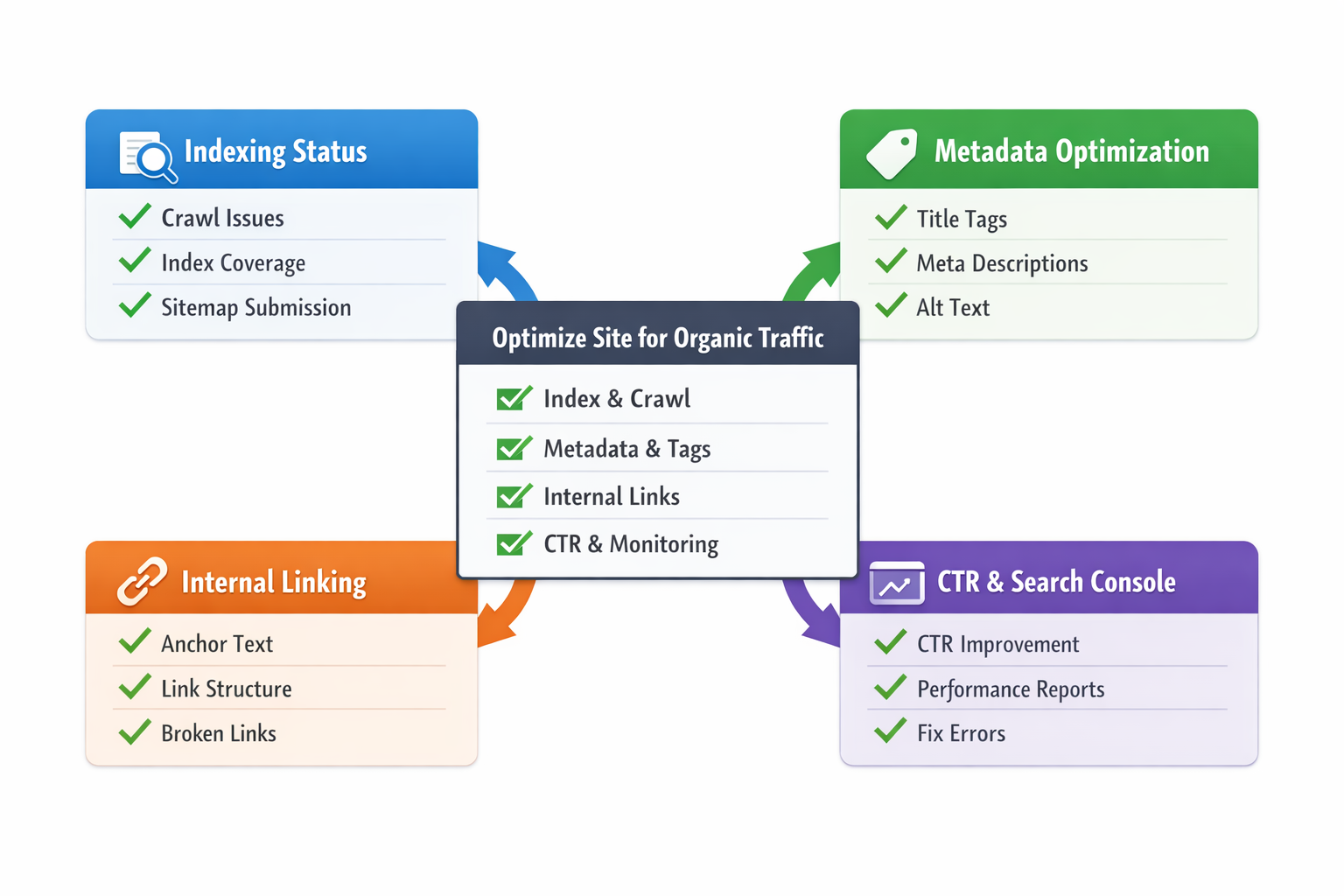
If you want a website that can keep earning search traffic over time, you need a small operating baseline before you publish at scale. These six rules are the first layer.
Use the search-driven web operations unit page as the main index for the related follow-up posts. This article is the baseline that keeps later indexing, metadata, and reporting articles connected.
1. Fix what should be indexable
Do not let search discover your site structure by accident. Decide which pages are core search targets, which pages support navigation only, and which pages should stay out of the index.
A practical version is simple: category hubs, core guides, and evergreen comparison pages usually stay indexable, while filter pages, thin tag pages, and duplicate utility pages usually do not.
2. Lock title and description rules
Title and description patterns should not change with mood. Decide how each page explains its problem, benefit, or checklist value, and keep that logic stable.
For example, a troubleshooting page can lead with the failure state, while a checklist page can lead with the expected outcome. The pattern matters more than clever wording.
3. Internal links should guide the crawl and the reader
Good internal links do more than keep users moving. They also help search engines understand page importance and topical structure.
A core page should usually link up to its unit page and down to one or two narrower follow-up pages. That creates a crawl path and a reader path at the same time.
4. CTR depends on page framing, not only rankings
Even when pages rank, weak snippets waste traffic. Search-driven operations need rules for how pages present urgency, clarity, and scope before the click.
If two pages cover similar intent, the one with a clearer frame such as a fix guide, checklist, or comparison scope will usually earn the better click even before ranking moves much.
5. Search Console should be part of the loop
Search Console is not a report you open once a month. It should be part of the operating rhythm for checking coverage, indexing, and query-level movement.
A weekly rhythm is enough at the start: check newly published pages, coverage changes, and queries that are getting impressions without strong clicks.
6. Measure movement, not just impressions
Impressions alone are weak. Track clicks, page-to-page movement, and whether readers continue into the next useful page after entering from search.
If impressions rise but readers do not move deeper into the site, the problem may be framing or link structure rather than indexing.
What to fix first
If you are setting this up now, lock indexing, metadata, and internal links first. Those three shape most of the search system before optimization details begin.
After that, go back to the unit page and split the next articles by indexing checks, metadata templates, or Search Console review loops. This page should stay the baseline instead of turning into another loose SEO opinion post.