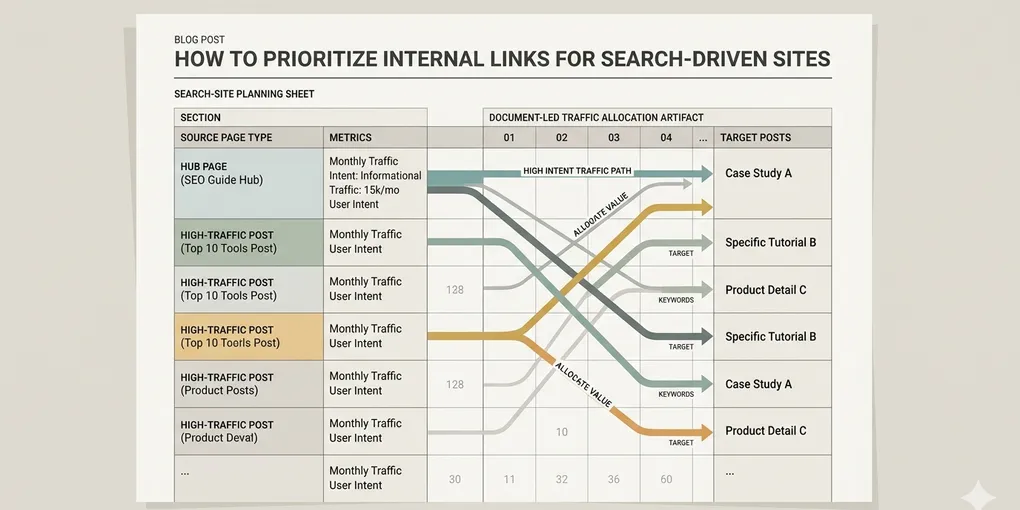
How to prioritize internal links for search-driven sites
Search-driven sites do not usually fail because they have too few links in total. They fail because the strongest pages are not connected to the pages that need support most. Internal links become effective when they move authority, context, and next-click intent in a deliberate order.
Use the search-driven web operations unit page as the index for follow-up posts on indexing, metadata, CTR, and Search Console checks. If you need the broader baseline first, start with the rules you should fix first. If your current issue is still diagnostic, continue with the sitemap fetch guide.
1. Start from pages that already receive attention
The first candidates are not random related posts. They are the pages that already receive search impressions, clicks, or direct reader attention. Those pages can distribute traffic better than a weak archive page with no visibility.
In practice, that usually means hub pages, stable evergreen posts, and a small set of pages that already rank or get bookmarked.
2. Give each page a link role
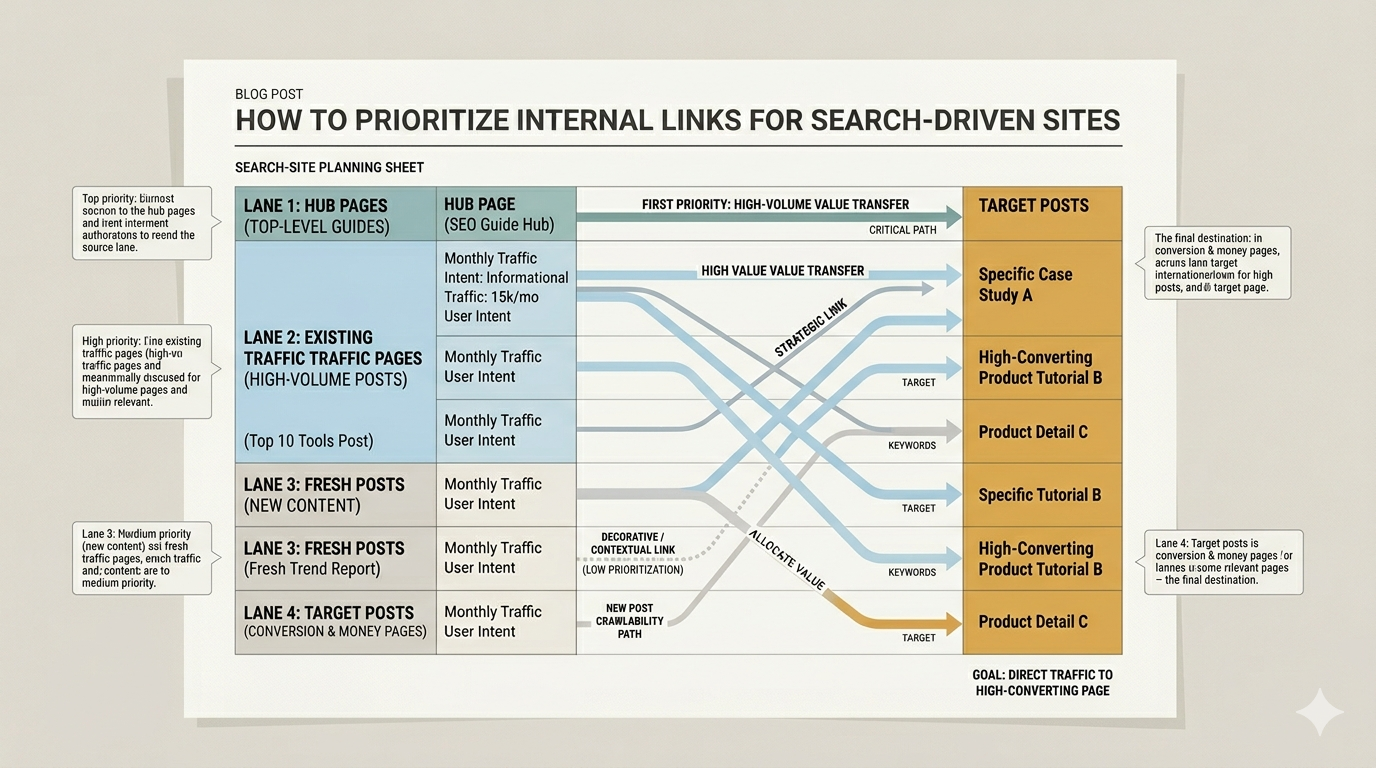
Internal links get clearer when pages have explicit roles. A hub page should point down into narrower fixes. A fresh post should receive one strong path in from an established page. A conversion or money page should receive support only from pages that actually match the next user question.
- Hub page: distributes structure
- Traffic page: passes attention
- Fresh post: needs one strong entry path first
- Target page: receives only relevant support
3. Similar topic is not enough
Many decorative internal links exist only because two articles sound related. That is not a strong reason. The better test is sequence: does this link answer the next likely question for the reader who just finished the current page?
If the answer is no, the link is decorative, not structural.
4. New posts should earn one clear path in first
When a new post is published, do not try to link it from everywhere. Give it one clear entry path from the most relevant strong page. That makes performance easier to observe and avoids polluting unrelated pages with vague links.
For example, if you publish a narrower guide on title rewrites, the first internal link should probably come from your broader CTR or snippet optimization hub, not from every SEO-tagged article on the site.
5. Review links by outcome, not by count
Count is a weak metric. A better review asks whether the right pages are sending the right readers into the right next step. Link audits should look at path quality, not just link volume.
A practical weekly check is simple: list your top traffic pages, your newest posts, and your target conversion or support pages. If the connection between those groups is unclear, your internal links are still under-prioritized.
What to do first
Pick one hub page, one existing traffic page, and one fresh post. Draw the smallest useful path between them. If you cannot explain why that path exists in one sentence, do not add more links yet. Fix the priority first.